Ryan Ansin is currently working with various teams to build a Keiretsu of interrelated businesses that help families strengthen their minds, bodies, and relationships to live a more wholesome future together.

Men spend 3x more minutes with their children since 1960 – that still amounts to 8 hours per week avg, dwarfed by mindless scrolling and social media (14-28 hours/week) with an approximate retention of 1% of our media ingestion. On behalf of children who did not ask to come into this world, I’ve begun a mission to rescue back adults’ attention to be rededicated toward their future reality that matters, sincerely.
FatherForm helps fathers be more intentional with their time and energy. Our families matter most and our communities are the fuel that allows us to grow. We must cater to our people more than be slaves to technology. FatherForm was built with the soul purpose of giving men the tools to be present with their most dear humans. This includes a smart journal, family relationship visualization and health scores, actual community – according to dunbar number – and their critical importance, a gift tracker, and an educational family timeline – custom to the user’s life journey.
My hope is this becomes the anti-social media app. If people engage with it 30 minutes a week, I hope 10+ hours weekly get rescued from the grips of social media scrolling and get redirected back toward the people who love and need our undivided attention.

Hideaway Inns is a portfolio of one-of-one hotels in regional destination markets — mountain towns, lakesides, and culturally rich small cities within an easy drive. It takes overlooked or dormant properties and reawakens them, filling each room with singular, locally-sourced art and furniture and building every stay around invisible, hands-off hospitality that removes friction rather than manufacturing it. Its purpose is plain: to expand time today for generations of joy — and behind that sits a vision of a world where wealth is measured in experiences rather than possessions.
That’s a quiet rebellion against what travel has become. Somewhere along the way the getaway got bastardized. Families are taxed with logistics, cleaning fees, chore lists, and status pricing, and come home on Tuesday more tired than they left on Friday — the trip meant to restore them instead depletes them. Hideaway exists to reverse that arithmetic and give people back the thing travel was always supposed to offer: retreat.
Which is only fitting, because that is what the work was originally called. Hospitality, hospice, hospital, host, and hostel all descend from the Latin hospes — host, guest, stranger — and the ancient, near-sacred duty to shelter the traveler as one of your own. A hospice, long before it meant anything else, was simply a house of rest for wayfarers and pilgrims. Hideaway is a return to that root: not a transaction, but refuge — a place that quietly facilitates the memory, then gets out of the way.
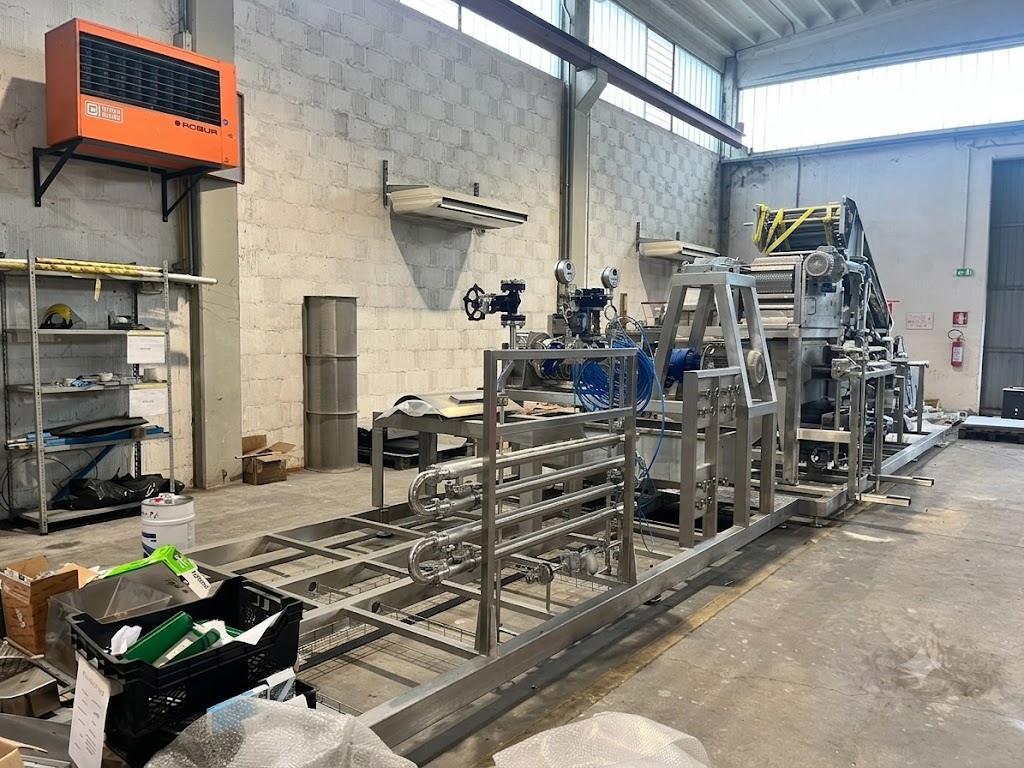
~~~~FOOD PROCESSING KEIRETSU~~~~ to be announced.
For as long as I can remember I have parroted experts’ opinions related to feeding the world’s hungry that we have a global logistics problem — not a food problem. Through 2022 -2025 I inspected myriad models and start-ups dedicated to “ugly food” and food waste strategies. I was disappointed by most risk profiles and scalability. I was excited by the scalability of Sierra Agra’s model in California’s Central Valley, and the capability to deploy similar, right-sized technology to be implemented in facilities of all sizes around the United States. As the CEO of Tropical Food Machinery, Stefano Concari, puts it, “No where else in the world is as bountiful, diverse, and wasteful as the United States.” This is a project worth a great deal of energy.
Ojie the Honeybee

I wrote Ojie the Honeybee to offer those who use plant-based medicine to revitalize, relax, and rejoice, or those who work in the field, a way to tell their kids what it is they do and why. There are hundreds of thousands of employees engaged in the legal cannabis industry, which has undergone decades of catastrophic mismanagement by unjust political actions – many of which perpetuate still today. Meanwhile, adults are finding medical and joyful alternatives with fewer side effects to pharmaceuticals, alcohol, et al. As we discover more, and healthier, ways our bodies and minds benefit from plant derivatizes – from lavender to tetrahydrocannabinol – age-appropriate dialogue about the professionalization of an industry is critical. Evolution, even perversely back to our roots, should be celebrated and shared in responsible and age-appropriate ways that don’t encourage any irresponsibility, but accentuate healthy life choices.