The present is a seed planted by the past containing the future.
By Ryan Ansin
The spring of 2026 came in cold, so we started our herbs indoors. We named each sprout after a friend. Basil for one. Thyme for another. Sage was dedicated to a friend’s young son, who was coming to visit in early summer. We began sending him videos of its planting and maturity from day-one.
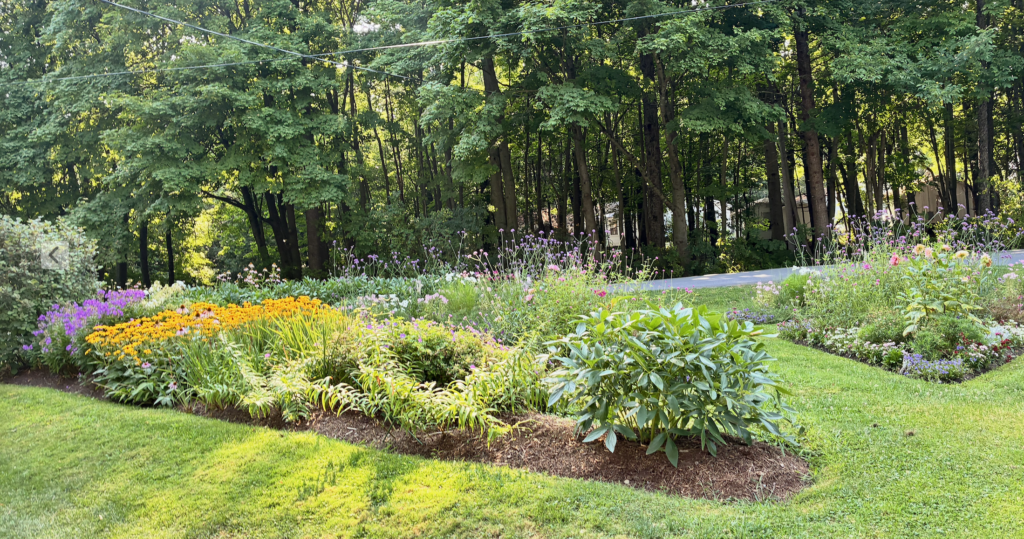
The sage had a hard go of it going from windowsill to garden bed. The corner we planted her in turned out shadier than we thought and for a few weeks it looked like it was deciding whether to bother.
We didn’t fuss over the sage itself. We tended the soil around it. We pulled the weeds crowding its roots and cut back the neighbors taking its sun. We sent videos all along the way. By the time he arrived, his sage was alive and thriving and our friends’ son carried great pride. (I’ve even made tea with it for the whole family.)
Something else took root that summer. A boy now knows that food comes from a place, that it struggles, and that someone tends it. Nobody lectured him. The seed of ideas just landed in good soil. The tools we used spanned nature, intentionality, recorded videos, and chronos time converted to Kairos.
That’s the frame I keep returning to when I think about protecting one’s attention. Tremendous subconscious energy is dedicated to receiving seeds of information. Very little goes into the soil or curation.
The oldest meaning of broadcast
Before it was radio, “broadcast” was a farmer’s word. In 1767 it referred to seed “dispersed upon the ground by hand.” A sower walked the field with a sack and flung seed in a wide arc. By 1785 the word had stretched to mean anything widely spread. When radio arrived in the early 1920s, it borrowed the image whole: one voice, a scattered crowd, no say over which ground catches it.1
Hand broadcasting became seen as wasteful. Birds took their share. Seed dried out on hard ground. In 1701, Jethro Tull built a seed drill that cut a furrow, dropped each seed at a set depth, and covered it over. Precision replaced the arc.
Nature has not evolved to follow suit. Oaks still drop acorns and let squirrels do the planting. Dandelions still trust the wind. Mushrooms launch spores into the air, and a 2015 study found that water condenses on those spores. The researchers suggest they may help seed rain over forests.2 A mushroom, possibly, making its own weather.
The scattering matters as a metaphor to our own experience of receiving broadcasted messages. Wasted seed does not sow negativity. The acorn that never sprouts feeds a squirrel. The spore that misses becomes part of a raindrop. Nature’s broadcast is generous even in its losses.
The broadcast we live inside now is a different thing.
From broadcast to drill
For most of the last century, the news really was a broadcast. A few networks expressed information, of which they were held accountable for the integrity, during an evening hour. The country shared the experience of hearing the same information. Eventually its purity changed. Local stations were describing their own policy as “if it bleeds, it leads” by the early 1980s.3 But everyone got the same seed. You could disagree with your neighbor, because your neighbor had heard what you heard. The field was shared, and you could argue over the fence.
Your current feed doesn’t work that way. It drills deeply. A model picks the seed relative to your currently displayed perspective, then plants it at the exact depth your history says it will take. If left without protest (choosing your own information) the model continuously deepens its perspective of you and further narrows your aperture.
The research is remarkably consistent. One team studied 22,743 headline experiments run by Upworthy, a site that tested several headlines for the same story. Each negative word in a headline raised clicks by about 2.3 percent. Each positive word lowered them by about 1 percent.4 A study of 563,312 tweets found that every moral-emotional word, the vocabulary of outrage and disgust, raised a message’s spread by about 20 percent.5 And when researchers at Cambridge and NYU examined 2.7 million posts from media outlets and members of Congress, each word attacking the other side raised the odds of sharing by about 67 percent. Positive words lowered them.6
Nobody in a newsroom actively chooses darkness. The revenue model chooses it for them, one A/B test at a time. Attention is the crop being sold, and fear grows fastest.
The drill itself was a good invention. Precision is not the problem. I’ve spent time recently building technology that delivers the right nudge at the right moment for a family’s age, stage, and state. That’s a drill too. I’ve worked hard to devise a revenue model (still unlaunched) that meets humans in the upward spiral of showing up for each other with curiosity and enjoying the act of delighting each other. We also optimize for users to grab a bit of information and run back out to the world, compared to incumbants who make money when you’re obsessed, engrossed, and clicking.
Most of our defenses were built for the old weather. We learned to turn off the evening news. We never learned to read the hopper.
You are the soil
There’s an old story about this. In the parable of the sower, a farmer broadcasts seed. Some lands on the path, and birds eat it. Some lands on rock, sprouts fast, and withers. Some lands among thorns and gets choked. Some lands in good soil and yields thirtyfold, sixtyfold, a hundredfold.7
The seed is the same every time. The ground is what differs.
That’s the shift I encourage. The media isn’t an invading army. Technology isn’t the enemy. It’s all about what you do with it. You don’t need armor. You need to know what kind of ground you are made of, and tend it.
Everything we take in is ingested. Food, drink, information. We wouldn’t stock the fridge with gummy bears and lard and call it dinner. Yet most of us let the newsfeeds fill our pantry and that of our children.
Robert Lustig, the pediatric endocrinologist, draws this line better than anyone in The Hacking of the American Mind, one of the most important books of the last decade. Pleasure and contentment feel alike. They are not. Pleasure runs on dopamine, contentment on serotonin. “Reward is short-lived (about an hour, like a good meal),” he writes. “Get it, experience it, and get over it.” By contrast, “contentment lasts much longer (weeks to months to years).”8
News feeds sells reward dressed up as information. Sugar that tastes like news. Lustig’s warning applies: “when taken to extreme, every stimulator of reward can instead result in addiction.”8 So does his reminder that “no thing can make you happy. Experiences can make you happy. People can make you happy. You can make you happy.”8
The soil isn’t only yours, either. Being part of a family is a responsibility for the health of our people. What lands on you lands on your kids: at the dinner table, in your tone, in the worry you carry through the door. Your attention is the fence-line for theirs.
Choosing the bright side
If darkness grows fastest under this model, lightness must be chosen on purpose – habitually.
Two children’s books on our shelf say this better than most grown-up books. In The Bright Side, Chad Otis draws on his own childhood to tell the story of a boy living in an old school bus who chooses to see the beauty in a hard situation.9 Nothing about his circumstances changes. His seeing does. It really is a gorgeous book.
In Also an Octopus, Maggie Tokuda-Hall shows that a story grows through a process, and part of that process is showing your whole self. Do that, and you draw in others who bring their own gifts to the work.
Put them together and you get something close to a philosophy. The bright side is a choice, not a mood. And it grows best in company.
Counter-broadcasters exist. Fix The News has spent years reporting the progress the headlines skip.10 Imagine that sprinkled across the land around the clock, pitched so a grandparent and a seven-year-old could both receive it. A different crop entirely.
In my own small way, that’s what Waffle Wednesday offers. A two-to-five-minute video every Wednesday to a small circle. Midweek, unprompted, deliberate. A broadcast of goodness, flung in a wide arc, with no idea which ground catches it. That’s it’s fine to be imprecise as wasted seed doesn’t sow negativity.
The revenue model keeps us clicking into the ugly, the dark, the disappointing. We keep climbing toward the light.
From seed to table: four steps for protecting your attention
Lustig’s own prescription for contentment fits in four words: “Connect, contribute, cope, cook.”8 They track almost exactly with how a good idea moves through a life.
- Germinate: choose what’s in the hopper. Pick your sources on purpose. Fiber over sugar. Knowledge over gossip. Problem-solving over fear. If a source’s business model depends on your outrage, it isn’t feeding you. Don’t slouch at this out of recency bias. Take an aggressive posture over other’s domination of your and your family’s attention. It isn’t right, it isn’t historic. Make your own decision.
- Grow: tend the soil before the seed arrives. The sage didn’t need a better seed. It needed the weeds pulled and the light let in. Clear what steals your sun: the 6 a.m. scroll, the notification that wasn’t meant for you, the app that opens itself.
- Feed: bring it to the table. An idea read alone has only landed. An idea talked through at dinner gets digested. Ask your kids what they saw today. Tell them what you read. Seed to table is a family practice.
- Disperse: broadcast back. Once something good grows in you, scatter it. A Wednesday video. A book passed across the table. A call to a friend from inside the hurricane. You won’t know which ground catches it. Fling it anyway.
By late summer the sage had filled out. Still a little crooked from all the moving. Still growing. The boy it was named for shared the story with his friends at show-and-tell when they each smelled its aromas and took a bite.
That’s the whole job. Tend the ground. Choose the seed. Watch what you let land.
Next: link to the feed/content terminology essay, on what the words we use for technology quietly admit about us.
- Online Etymology Dictionary, “broadcast.” https://www.etymonline.com/word/broadcast ↩
- Hassett, M.O., Fischer, M.W.F., & Money, N.P. (2015). “Mushrooms as Rainmakers: How Spores Act as Nuclei for Raindrops.” PLoS ONE 10(10). Summary: https://www.scientificamerican.com/blog/artful-amoeba/made-by-rain-mushrooms-also-make-it/ ↩
- Popik, B. “If it bleeds, it leads.” Earliest documented use: Broadcasting, July 19, 1982, p. 63. https://barrypopik.com/blog/if_it_bleeds_it_leads ↩
- Robertson, C.E., et al. (2023). “Negativity drives online news consumption.” Nature Human Behaviour 7, 812–822. https://www.ncbi.nlm.nih.gov/pmc/articles/PMC10202797/ ↩
- Brady, W.J., et al. (2017). “Emotion shapes the diffusion of moralized content in social networks.” PNAS 114(28). https://csmapnyu.org/research/academic-research/emotion-shapes-the-diffusion-of-moralized-content-in-social-networks ↩
- Rathje, S., Van Bavel, J.J., & van der Linden, S. (2021). “Out-group animosity drives engagement on social media.” PNAS 118(26). https://www.cam.ac.uk/stories/viralpolitics ↩
- Matthew 13:3–8. ↩
- Lustig, R.H. (2017). The Hacking of the American Mind: The Science Behind the Corporate Takeover of Our Bodies and Brains. New York: Avery. (HITL: add page numbers from your copy.) ↩ ↩2 ↩3 ↩4
- Otis, C. (2023). The Bright Side. Rocky Pond Books. https://www.penguinrandomhouse.com/books/706956/the-bright-side-by-chad-otis/9780593530627/ ↩
- Fix The News. https://fixthenews.com/about ↩