How men show up for each other has a lot to be desired.
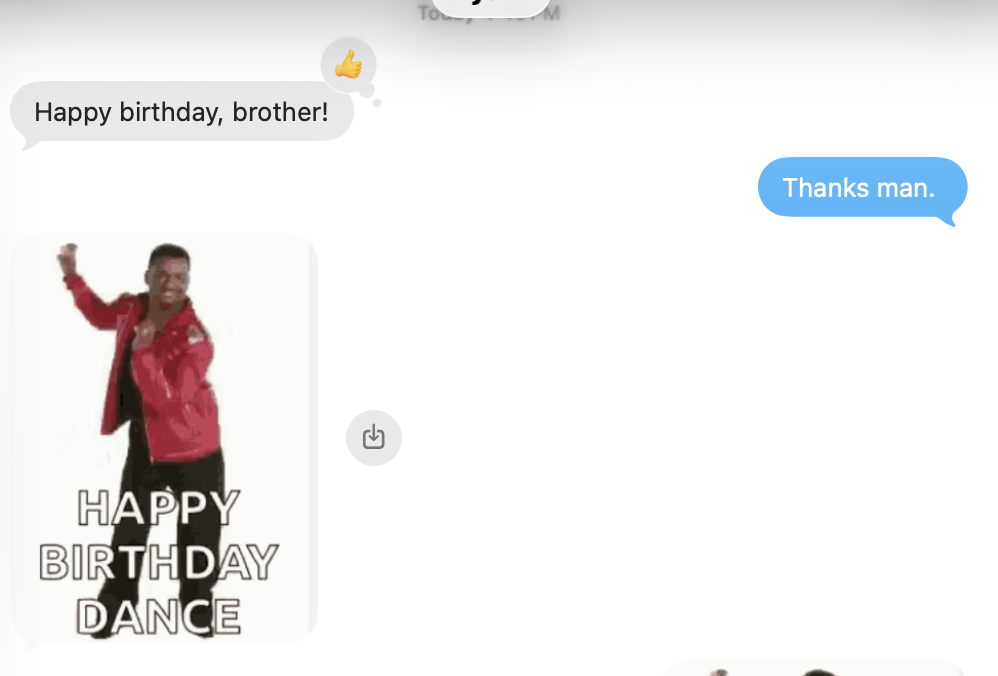
One person on the group chat types “Happy Birthday.” A second sends a thumbs up. A third finds a GIF. That’s it. That’s the ceremony. Somewhere along the way, this became how grown men tell each other they matter.
We don’t message a friend a year after his father dies, on the date, to say we remember. We don’t circle back to the guy who admitted, quietly, that things were hard right now. We wait. We let the moment pass, tell ourselves he’d reach out if it were serious, and return to the feed. The bar for showing up has gotten so low it’s practically underground — and we keep clearing it and calling it friendship.
I’ve started asking the men in my life for one thing: call me from inside the hurricane. Not once it’s passed. Don’t tell me six months later that you were drowning in the spring. Call me while the water is rising. That’s the whole point of having someone.
The data isn’t subtle
The number of American men reporting at least six close friends fell by half between 1990 and 2021 — from 55% to 27%. Over the same window, the share of men who say they have no close friends rose fivefold, from 3% to roughly 15%. The distribution didn’t just shift; it plummeted, with fewer men at the rich end and more men at zero. This seems to signal that when you have had fewer things, you build systems, intentionally or not, to create love instead of buy things to feel it for but a moment.
But the more revealing gap isn’t how many friends men have — it’s what those friendships actually do. Pew’s 2024 survey found that just 38% of men would be extremely or very likely to turn to a friend for emotional support, compared to 54% of women. Men are about 50% less likely than women to report anyone checking in on them in a given week.
It’s one thing to have agency, to reframe, and to make progress. It’s quite another to shut down and systematically rob ourselves from external support, elongating the period of counterproductive suffering.
Two-thirds of young American men say some version of the same devastating sentence: no one really knows me.
Women learned the maintenance. Men learned the box score.
This isn’t about capacity for love. Men love their people ferociously. It’s about a muscle no one taught us existed (off of the field), and definitely not how to use it during adulthood: the unglamorous maintenance of relationships. Women, broadly, learned it young: the follow-up text, the “how did the appointment go,” the memory that this week is hard because of a death last year. I have to write it down – in iCal and in my journal – to ensure this surfaces next year. Boys were rewarded for the win, the score, the scar. Even the blood on the sword (à la Gangs of New York). Silent presence alongside, objectively not reaching out to carry the load.
So men built friendships that run beautifully at 30,000 feet: a round of golf and a beer – “I’m good.” But we risk stalling completely when altitude drops. When one man is actually in the storm, the machinery has no gear for outreach. We hibernate to a degree. We dig out. We even know the tools exist in our friends’ hands but don’t want to be a bother. The cost lands three times: on the man white-knuckling it alone, increasingly on the women in his life, and if a Dad, radiating outward to children. Wives and children quietly absorbing the emotional labor he was never taught to settle with other men.
The fix is embarrassingly ordinary
Every study that documents the decline points at the same repair: repeated, low-pressure, in-person time with the same people. It doesn’t need to be an organized retreat – it’s curiosity on a standing Tuesday when someone asks to take a walk instead of a next drink in a loud, sports-filled bar.
The practice starts with refusing the bandwagon on birthdays. Start calling instead. Mention that you push back against the shallow and want to dig in. “What does your next year look like?” “How fast did the last ten years fly?” “What didn’t you do?”
Put a real note in your own calendar to send a note a week before the birthday and let everyone else ding a phone on the day-of. He’ll never forget it.
not for his birthday, for a random Thursday three weeks out — and check on him then, when the applause has died down and everyone else has moved on. That’s when it counts. That’s when he’ll remember you were there.
You don’t need anyone’s permission to be a better friend. You just need to pick up the pen, facetime, send a book, send an article – ask a damn question. Open the door for him to ask you others.
Don’t leave people out in the storm. Find out who has one brewing inside right now.